

A couple of things attracted our attention over the past few weeks and we thought it prudent to post our annual reminder that the James River is a wild, living thing and not a curated carnival ride.
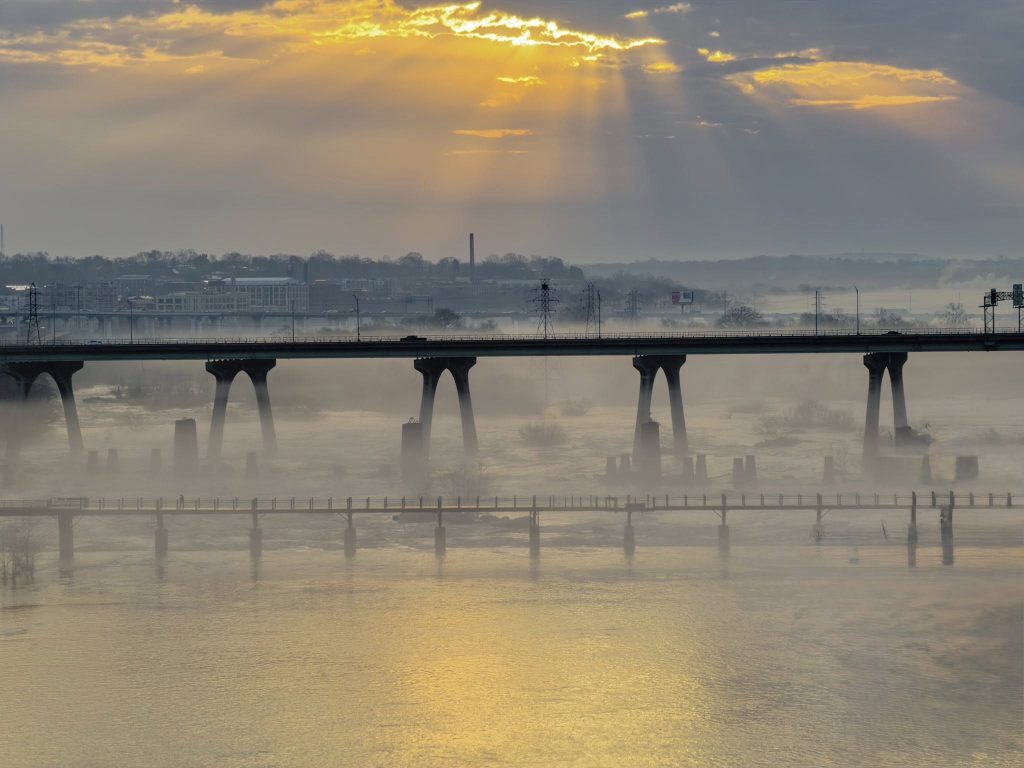
A couple of weeks ago, significant portions of the James had a good coating of ice, and our dear friend Bill Draper snapped a photo of people out in the middle of the river attempting to ice skate. There are several problems with this.
As a moving body of water, the James will never completely freeze. In order to skate or even walk on ice, you need a minimum of 4 inches of ice. If the ice isn’t clear or solid over the surface of the water, you’re going to need at least 8 inches of ice. You would need several weeks of below-freezing temperatures to get that sort of buildup, and between the river currents and the fact that weather in Richmond is notoriously fickle, that’s not going to happen.
Should you break through the ice, you risk being pulled under the ice and becoming trapped. If it’s cold enough to freeze, that means the water temperature is at or just above freezing, so you’ll develop hypothermia in just a couple of minutes.
The other thing that raised our antenna was something we saw while driving down the Powhite. On certain days, the river levels seemed reasonable, and then the next day it would be churning and muddy. It seemed as if every obstacle to the water flow – each tiny island or boulder, and certainly the bridge trestles – had a huge tree trunk (or several!) precariously balanced on top of it.
Spring is just around the corner, which means more and more people will be heading to the James River Park to enjoy the warmer weather, and as Spring turns to Summer, to enjoy the river.
While the geology of the Park creates exciting whitewater as the James flows through Richmond – and there are certainly plenty of places to have a quiet wade – things like those tree trunks create dangerous obstacles for those in the water. Often, they’re just under the surface of the river, creating what’s known as a “strainer.” While fish and small debris can flow right through, something larger like a kayak or a person can easily become trapped. As we start to get our Spring showers and then Summer storms, more debris will build up in the James. It’s a cycle – things wash in and things wash out – but the James collects debris from over 10,000 square miles of land along its 400 or so mile course.
That’s a lot of debris.
The James River is the heart of our beloved Park, and it’s why Richmond became Richmond. We work to expand opportunities for people to enjoy it. We encourage everyone to respect it.