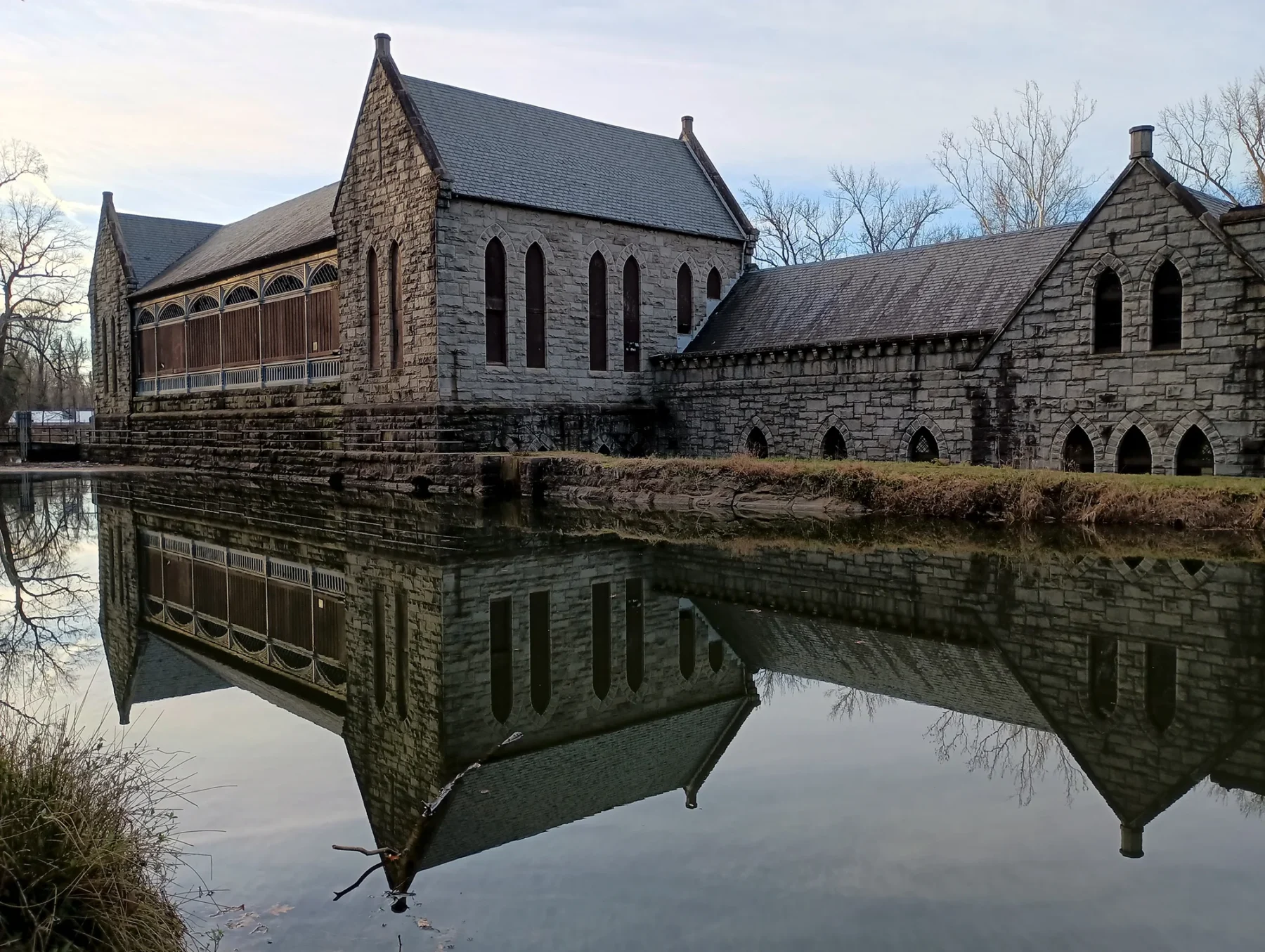
The New Pump House served as the primary waterworks for the city of Richmond from 1883 until 1924. It featured water-driven pumps capable of moving 12 million gallons of water per day to the reservoir in Byrd Park. Constructed of local granite, the Pump House is an impressive example of late 19th century Gothic Revival architecture. In addition to its utilitarian function, the Pump House’s second floor pavilion served as a venue for numerous social events at the turn of the 20th century.
In addition to wooded trails, visitors can view the remnants of three historic canals:
The James River Canal was built to bypass the nearby falls and stretched as far as Westham. President George Washington visited this section of the canal in 1791, traveling by boat through the stone Lower Arch located at the west end of the Park.
The James River and Kanawha Canal, which was intended to provide a navigable waterway all the way to the falls of the Kanawha River in present-day West Virginia. The Three-Mile Locks of this canal are located within the Park.
The Pump House Canal supplied water to turbines within the building, which were used to drive pumps and later, electrical generators.
The Pump House building is not open to the public except through tours offered by Friends of Pump House and the James River Park System.
Use caution when crossing the wooden bridges that span the canals, and please stay on marked trails. There is no access to the James River from Pump House Park.
Fast Facts
The “new” pump house
The building was known as the New Pump House because it augmented an existing pump house located on Tredegar St.
Maximum Capacity
The Pump House could fill approximately 18 Olympic-size swimming pools each day when running at maximum capacity.